Tower Evacuation in Rzeszów: How Threats to Polish Airport Affect Ukrainian Logistics
During a massive Russian strike on Ukraine, the air traffic control tower at Poland's Rzeszów-Jasionka airport was evacuated for the first time due to an airborne threat. Fallen debris in Poland highlights risks for the key transit hub.
 💼Economy
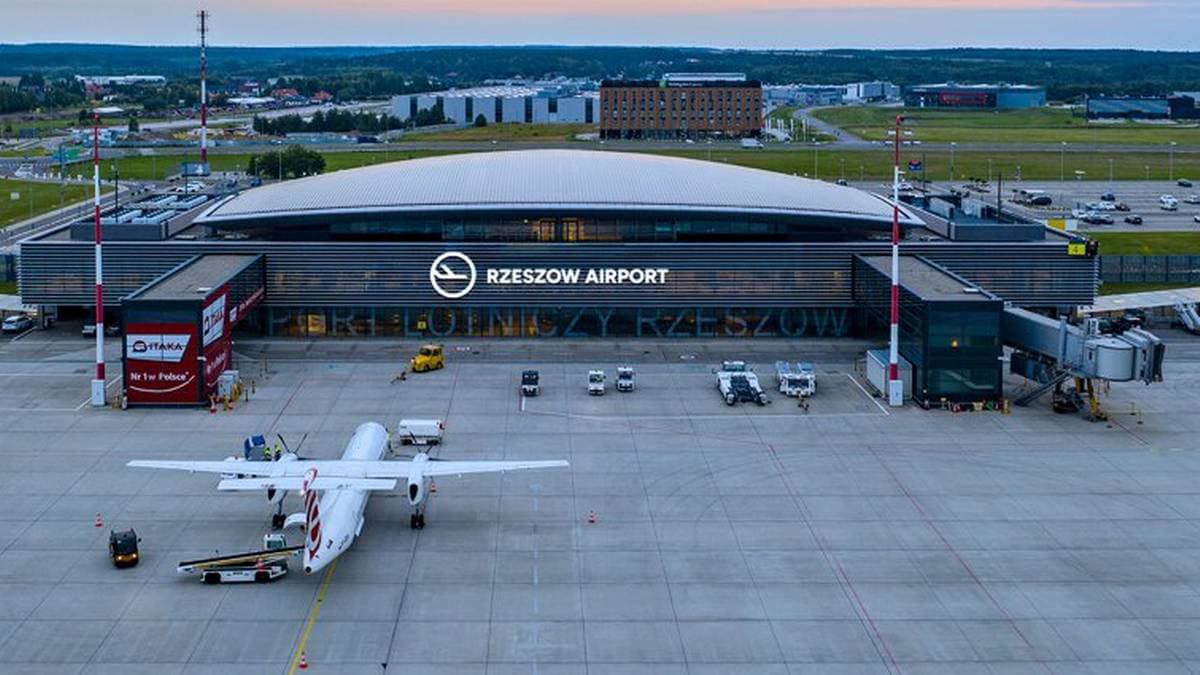
Photo: Ukrainska Pravda
Key points
- Control tower at Rzeszów-Jasionka Airport evacuated for the first time
- Object debris discovered following an explosion in Chmelek, Lublin region
- Polish military jets scrambled, temporarily halting civil aviation flights
During a massive Russian attack on Ukrainian cities on Friday morning, the air traffic control tower personnel at Poland's Rzeszów-Jasionka Airport were urgently evacuated for the first time in its history. The action was triggered by an air hazard warning and potential airspace violations by unidentified flying objects.
According to Polish Minister of Infrastructure Dariusz Klimczak, nine people, including six operational dispatchers, were moved to a temporary shelter. Similar safety procedures had previously been deployed only twice for control tower staff in Lublin. Airport operations were suspended temporarily to accommodate Polish military aircraft scrambled to defend national airspace.
Military Response and Investigation in Poland
Concurrently, emergency services in Chmelek village, Lublin Voivodeship, registered a powerful explosion and located burning debris from an unidentified object. Lieutenant Colonel Jacek Goryszewski, spokesperson for the Operational Command of the Polish Armed Forces, confirmed that military authorities are investigating two possible airspace violations during the strikes on western Ukraine.
The Polish Air Navigation Services Agency made the evacuation decision strictly following established safety protocols. Poland's Government Centre for Security had received advance warning of potential aerial danger, facilitating prompt precautionary measures.
Impact on Passenger and Freight Logistics
Rzeszów Airport serves as a key international logistics and transit hub for Ukrainians, handling passenger travel, commercial imports, and humanitarian aid. Temporary airspace closures near the border disrupt transport routes and delay deliveries.
Source Ukrainska Pravda — pravda.com.ua/news/2026/11/20/8063758/ ↗
Read next
 🏛️Politics
SAPO Prosecutor Reacts to Criticism Over Media Support in NABU Investigations
During a discussion on the quality of evidence in high-profile cases, SAPO prosecutor Rostyslav Batyh commented on the work of the Anti-Corruption Bureau's communications…
 🛡️Security
NATO Rejects Kremlin's Demand to Return to 1997 Borders: Mark Rutte's Stance
NATO Secretary General Mark Rutte has dismissed Russia's demands to roll back the Alliance's presence to its 1997 configuration as 'unacceptable'.
 🩺Health
Scientists Identify Critical Periods of Immune Aging: When the Body Is Most Vulnerable
A new scientific study has shown that our body's defense mechanisms age not gradually, but in sudden leaps around the age of 40 and after 60.
 🛡️Security
DTEK sets yearly record by restoring power to 3.5 million families in a week
Between November 16 and 22, DTEK energy workers restored electricity for 3.5 million Ukrainian families following massive shelling.
 🛡️Security
Enemy FPV Drone Attacks Pharmacy in Sumy Region: One Seriously Injured
In the border town of Seredyna-Buda in the Sumy region, Russian forces targeted a local pharmacy with six FPV drones, leaving an elderly civilian heavily wounded.
 🛡️Security
New Geography of Naval Warfare: Explosions in Libya and the Gulf of Finland Expose Russian Logistics Vulnerabilities
A series of incidents involving Russian vessels in Benghazi and the Gulf of Finland highlights the global vulnerability of Russia's naval routes.