Cascading crisis in metallurgy threatens Ukrainian city budgets and jobs
Production cuts in Ukraine's mining and metals sector trigger tax shortfalls and job losses, creating a ripple effect across the economy and local communities.
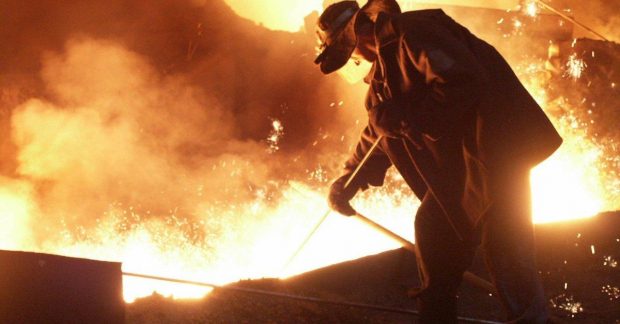 💼Economy
Photo: UNIAN
Key points
- Production drops in metallurgy cause tax deficits and job losses.
- Leading metals companies report significant declines in tax payments over the first three quarters of 2026.
- Industrial cities are forced to cut budgets and halt infrastructure projects.
- The crisis triggers a chain reaction affecting energy, logistics, and small businesses.
The ongoing crisis in Ukraine's metallurgy industry has evolved from a sector-specific challenge into a systemic threat to national and local finances. Driven by persistent enemy shelling, energy deficits, surging logistics costs, and restrictions on foreign markets, key industrial players are forced to scale back output. This directly impacts revenue streams across all levels of government, creating severe funding gaps for critical public needs.
A chain reaction for the economy and communities
According to analytical reports, leading metallurgical enterprises recorded significant drops in tax payments during the first three quarters of 2026. Metinvest, for instance, reduced its budget contributions by 6%, while value-added tax revenues plunged by 36%. Other plants faced even steeper declines, with some cutting tax remittances by nearly half compared to previous periods. Metinvest CEO Yuriy Ryzhenkov noted that the industry has reached a critical tipping point, jeopardizing both production capabilities and export volumes.
Industrial cities bear the brunt of this shock, as local treasuries heavily rely on personal income taxes and land levies from large manufacturing facilities. Shrinking financial foundations are already forcing municipal administrations to implement budget sequestering, abandon local development projects, and freeze investments in roads, schools, and hospitals. Consequently, local communities are losing their capacity to co-finance essential initiatives and international grant programs.
The domino effect on allied sectors
The troubles within the mining and metals sector trigger a sweeping cascade affecting numerous interconnected industries. Reduced orders from steelmakers directly harm the energy sector, railways, machine-building plants, logistics providers, and small businesses. Lower incomes among industrial workers lead to a drop in domestic consumption, negatively impacting local retail and service providers.
Experts emphasize that stabilizing the situation requires comprehensive measures, including unblocking maritime export routes, optimizing supply chains, and securing stable power supplies. Resolving these challenges is vital not just for the survival of individual enterprises, but for maintaining the financial resilience of Ukrainian cities and the state as a whole.
Source UNIAN — unian.ua/society/kaskadniy-efekt-padinnya-virobnictva-u-metalurgiji… ↗
Read next
 🏛️Politics
SAPO Prosecutor Reacts to Criticism Over Media Support in NABU Investigations
During a discussion on the quality of evidence in high-profile cases, SAPO prosecutor Rostyslav Batyh commented on the work of the Anti-Corruption Bureau's communications…
 🛡️Security
NATO Rejects Kremlin's Demand to Return to 1997 Borders: Mark Rutte's Stance
NATO Secretary General Mark Rutte has dismissed Russia's demands to roll back the Alliance's presence to its 1997 configuration as 'unacceptable'.
 🩺Health
Scientists Identify Critical Periods of Immune Aging: When the Body Is Most Vulnerable
A new scientific study has shown that our body's defense mechanisms age not gradually, but in sudden leaps around the age of 40 and after 60.
 🛡️Security
DTEK sets yearly record by restoring power to 3.5 million families in a week
Between November 16 and 22, DTEK energy workers restored electricity for 3.5 million Ukrainian families following massive shelling.
 🛡️Security
Enemy FPV Drone Attacks Pharmacy in Sumy Region: One Seriously Injured
In the border town of Seredyna-Buda in the Sumy region, Russian forces targeted a local pharmacy with six FPV drones, leaving an elderly civilian heavily wounded.
 🛡️Security
New Geography of Naval Warfare: Explosions in Libya and the Gulf of Finland Expose Russian Logistics Vulnerabilities
A series of incidents involving Russian vessels in Benghazi and the Gulf of Finland highlights the global vulnerability of Russia's naval routes.