German Far-Right Leader Calls for Deportation of Millions of Foreigners, Including Ukrainians
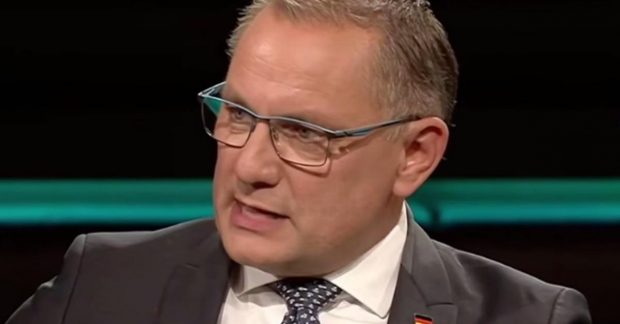
Tino Chrupalla, co-chair of the Alternative for Germany party, has proposed expelling 2.6 million foreigners if security conditions in their home countries improve.
 🇺🇦Ukraine
Photo: UNIAN
Key points
- Tino Chrupalla proposed deporting 2.6 million foreigners
- The list includes citizens of Ukraine, Syria, and Afghanistan
- Legal experts emphasize the impossibility of mass deportations
- Germany previously extended temporary protection for Ukrainians
The debate over migration policy in the European Union has intensified following a controversial proposal by a high-ranking German politician. Tino Chrupalla, co-chair of the right-wing Alternative for Germany (AfD) party, has publicly called for the deportation of approximately 2.6 million foreigners from the country, linking the measure to potential political and security changes in the migrants' homelands.
The Scope of the Proposed Expulsions
According to Chrupalla’s outline, the plan would target not only individuals facing mandatory expulsion orders or those convicted of crimes, but also citizens of Syria, Afghanistan, and Ukraine. The politician argued that once the war in Ukraine ends or security conditions in other source countries stabilize, the grounds for international protection will cease to exist, obliging these individuals to leave.
However, migration experts and academic specialists have quickly dismissed these figures as misleading and legally unfeasible. Daniel Thym, a migration law expert at the University of Konstanz, pointed out that the AfD leader creates a false impression that millions of people can be deported swiftly and without due process. German and European legal frameworks strictly require an individual review of every person’s protection status rather than blanket group expulsions.
Context and Implications
Internal disagreements within the AfD itself regarding deportation logistics have highlighted the impracticality of such vast numbers, with other party members previously acknowledging that even a fraction of that total would represent an unprecedented logistical challenge.
For Ukrainian families with relatives or acquaintances currently residing in Germany, such rhetoric adds to psychological anxiety, despite conflicting with official decisions to extend temporary protection measures for displaced Ukrainians. The situation demonstrates that migration will remain a contentious issue in European domestic politics, requiring careful attention to legislative updates.
Source UNIAN — unian.ua/world/deportaciya-inozemciv-spivgolova-adn-zaklikav-vislat… ↗
Read next
 🏛️Politics
SAPO Prosecutor Reacts to Criticism Over Media Support in NABU Investigations
During a discussion on the quality of evidence in high-profile cases, SAPO prosecutor Rostyslav Batyh commented on the work of the Anti-Corruption Bureau's communications…
 🛡️Security
NATO Rejects Kremlin's Demand to Return to 1997 Borders: Mark Rutte's Stance
NATO Secretary General Mark Rutte has dismissed Russia's demands to roll back the Alliance's presence to its 1997 configuration as 'unacceptable'.
 🩺Health
Scientists Identify Critical Periods of Immune Aging: When the Body Is Most Vulnerable
A new scientific study has shown that our body's defense mechanisms age not gradually, but in sudden leaps around the age of 40 and after 60.
 🛡️Security
DTEK sets yearly record by restoring power to 3.5 million families in a week
Between November 16 and 22, DTEK energy workers restored electricity for 3.5 million Ukrainian families following massive shelling.
 🛡️Security
Enemy FPV Drone Attacks Pharmacy in Sumy Region: One Seriously Injured
In the border town of Seredyna-Buda in the Sumy region, Russian forces targeted a local pharmacy with six FPV drones, leaving an elderly civilian heavily wounded.
 🛡️Security
New Geography of Naval Warfare: Explosions in Libya and the Gulf of Finland Expose Russian Logistics Vulnerabilities
A series of incidents involving Russian vessels in Benghazi and the Gulf of Finland highlights the global vulnerability of Russia's naval routes.