From nuclear reactors to power grids: Technologies NASA needs for a permanent Moon base
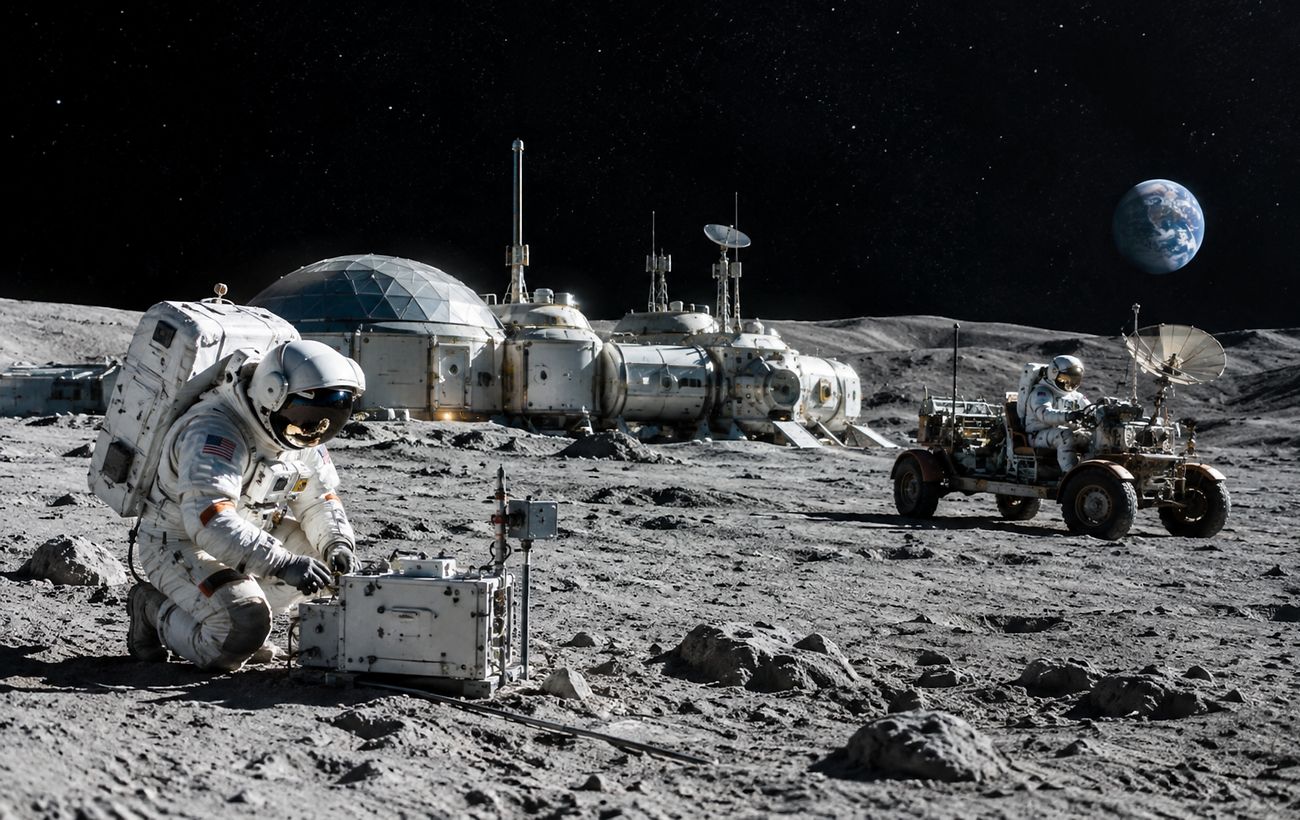
NASA and international researchers are advancing seven critical technologies required to establish a sustainable human presence on the Moon.
 💡Tech
Photo: RBC-Ukraine
Key points
- NASA is developing seven key technologies for lunar habitation
- A compact nuclear reactor is slated for lunar deployment by 2030
- In-situ resource utilization will provide water, oxygen, and fuel
Establishing a permanent human outpost on Earth's natural satellite demands innovative engineering solutions across multiple domains, ranging from power generation to radiation protection. NASA is actively collaborating with global scientists to develop seven core technologies that will make long-term lunar missions feasible.
Power, Resources, and Survival
Solar panels alone cannot sustain a lunar base due to the two-week-long lunar night, prompting the development of alternative solutions such as vertical solar arrays and compact nuclear reactors, with the Lunar Reactor-1 targeted for delivery by 2030. Furthermore, utilizing in-situ resource utilization (ISRU) strategies will allow astronauts to harvest water ice from permanently shadowed polar craters and extract oxygen from local regolith.
To ensure crew safety, advanced life support systems must recycle water and air efficiently while operating autonomously for years. Engineers are also tackling abrasive lunar dust using electrodynamic shields and protecting habitats from cosmic radiation by blanketing modules with thick layers of lunar soil.
Source RBC-Ukraine — rbc.ua/ukr/news/vid-dernogo-reaktora-5g-shcho-potribno-nasa-1794836… ↗
Read next
 🏙️City
Enemy shifts tactics: energy infrastructure faces new threats
President Volodymyr Zelenskyy reported a change in Russian military tactics, now focusing on the deliberate destruction of power transmission lines and energy grids.
 👥Society
How Childhood Overparenting Affects Adult Life: Psychological Insights
Psychologists explore how excessive parental control during childhood shapes an individual's character and behavior in adulthood.
 🚨Events
Tragedy in the Mountains: Ukrainian Citizen Found Dead After Illegal Border Crossing in Romania
Romanian rescuers have discovered the body of a Ukrainian citizen in the snowy Maramureș mountains. Two other men were successfully rescued during a difficult operation.
 🎭Culture & Sport
Ukrainian boxer Sofiia Turbinina wins bronze at the U23 European Championship in Croatia
Ukrainian athlete Sofiia Turbinina claimed a bronze medal at the continental U23 boxing championship held in Poreč, Croatia.
 💼Economy
Labor Shortage in Ukraine: Which Specialists Remain in Demand Despite High Salaries
The Ukrainian labor market continues to face an acute shortage of personnel in manufacturing, technical, and medical sectors, with some vacancies receiving less than one …
 🇺🇦Ukraine
Pentagon Restricts Military Cooperation with Canada via Secret Hegseth Directive
US Defense Secretary Pete Hegseth signed a classified directive limiting military ties with Canada, increasing friction between Washington and Ottawa.