Global environmental threat: a giant belt of seaweed is rapidly expanding in the Atlantic
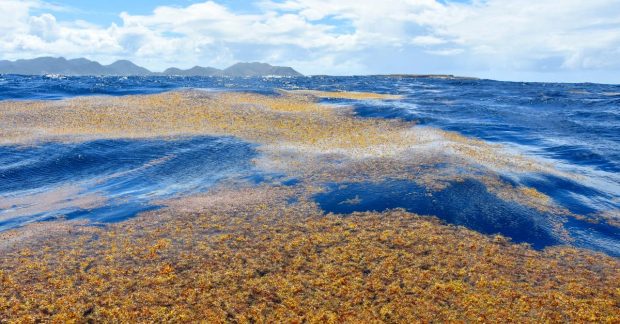
Scientists report record-breaking growth of sargassum seaweed clusters in the Atlantic Ocean, creating new challenges for the global ecosystem.
 👥Society
Photo: UNIAN
Key points
- Record size of the seaweed belt — 8,850 km.
- Excess nitrogen and phosphorus stimulate sargassum growth.
- Decomposing seaweed releases toxic gases.
A rapid expansion of a belt of pelagic sargassum, a type of brown seaweed previously confined to the Sargasso Sea, is being observed in the Atlantic Ocean. According to satellite monitoring data, the length of this formation reached a record 8,850 kilometers in 2025, which is more than double the width of the continental United States.
Causes and consequences of the anomalous bloom
Researchers note that the cause of this expansion is an excessive influx of nitrogen and phosphorus into oceanic waters. These nutrients enter the ocean through both natural processes and human activities, including agricultural runoff and wastewater discharge. The Amazon River plays a key role in fueling these algae, creating a favorable environment for their rapid proliferation.
While sargassum serves as a vital habitat for many marine species, its excessive volume is becoming an environmental issue. When massive amounts of seaweed wash ashore, they decompose, releasing toxic hydrogen sulfide and methane. This not only harms local ecosystems and coral reefs but also causes significant damage to the tourism industry and infrastructure in coastal regions.
Source UNIAN — unian.ua/ecology/sargasovi-vodorosti-v-atlantici-chomu-gigantskiy-p… ↗
Read next
 🏛️Politics
SAPO Prosecutor Reacts to Criticism Over Media Support in NABU Investigations
During a discussion on the quality of evidence in high-profile cases, SAPO prosecutor Rostyslav Batyh commented on the work of the Anti-Corruption Bureau's communications…
 🛡️Security
NATO Rejects Kremlin's Demand to Return to 1997 Borders: Mark Rutte's Stance
NATO Secretary General Mark Rutte has dismissed Russia's demands to roll back the Alliance's presence to its 1997 configuration as 'unacceptable'.
 🩺Health
Scientists Identify Critical Periods of Immune Aging: When the Body Is Most Vulnerable
A new scientific study has shown that our body's defense mechanisms age not gradually, but in sudden leaps around the age of 40 and after 60.
 🛡️Security
DTEK sets yearly record by restoring power to 3.5 million families in a week
Between November 16 and 22, DTEK energy workers restored electricity for 3.5 million Ukrainian families following massive shelling.
 🛡️Security
Enemy FPV Drone Attacks Pharmacy in Sumy Region: One Seriously Injured
In the border town of Seredyna-Buda in the Sumy region, Russian forces targeted a local pharmacy with six FPV drones, leaving an elderly civilian heavily wounded.
 🛡️Security
New Geography of Naval Warfare: Explosions in Libya and the Gulf of Finland Expose Russian Logistics Vulnerabilities
A series of incidents involving Russian vessels in Benghazi and the Gulf of Finland highlights the global vulnerability of Russia's naval routes.